Tag Archives: Painting

Theme

Marilyn Monroe – my rendition of a digital image

Canadian Blogger eh!

July 19, 2015

Thankful for beautiful sunshine, bringing warmth on a Sunday afternoon!

Category Painting

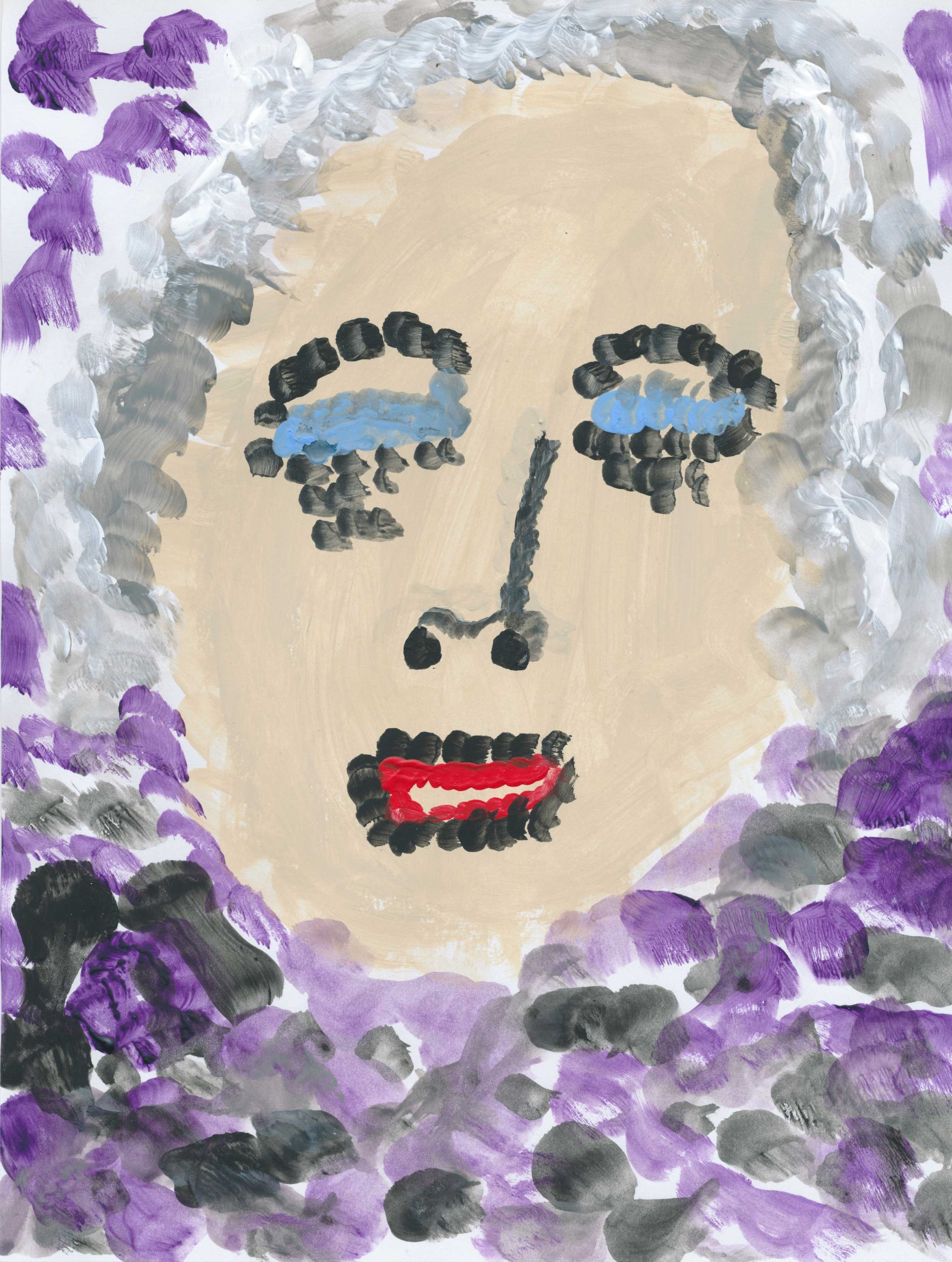
Acrylic Paint on 8.5 inch by 11 inch 110 lb. card stock. I’m naming this painting “Marilyn” spring / summer 2015

This is my rendition of a digital image, I found in one of my art books of Marilyn Monroe.

Marilyn

Final thoughts:

Paint, draw, sketch, and or write, daily.

Beacon Tate

Just Dave

Canadian Blogger eh!

July 17, 2015

Thankful for Friday night football (CFL) and that I live in a country (Canada)  where anyone can be a spectator for the price of a ticket.

Category Painting

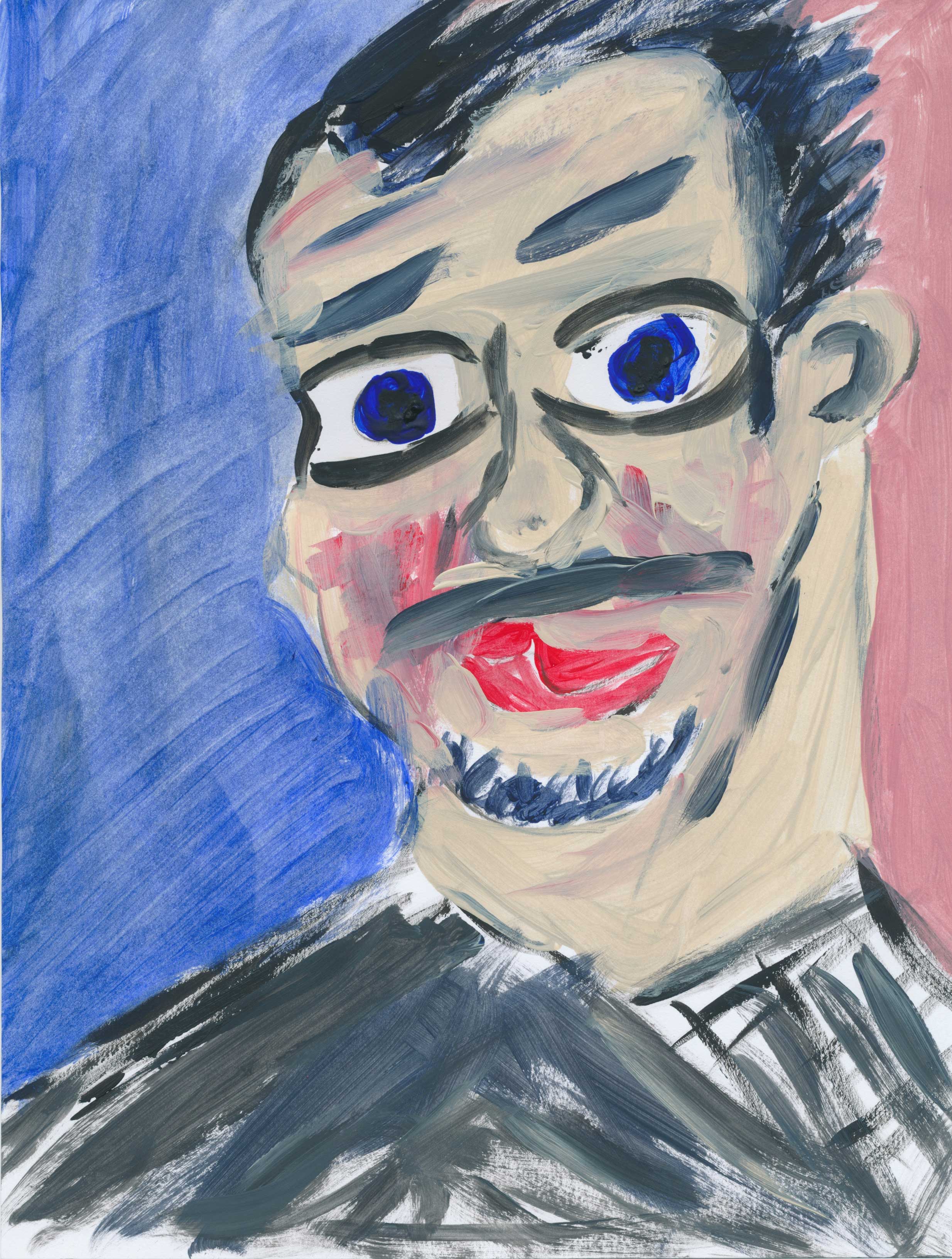
Acrylic Paint on 8.5 inch by 11 inch 110 lb. card stock.  I’m naming this painting “Just Dave”    spring / summer 2015


Just Dave

Final thoughts:

Paint, draw, sketch, and or write, daily.

Beacon Tate

Football anyone – brushes

Canadian Blogger eh

July 14 2015

Thankful for France!    Today is their national day!

Category Painting

Brushes

So many kinds of brushes, round brushes, flat brushes, flat-tipped brushes, fan brushes, flat wash brushes, bell-shaped brushes, thin brushes, thick brushes. Brush hairs made out of sable, squirrel, mongoose, goat, ox, imitation sable, hair blend, synthetic, pony, bristle. Brush sizes from 10/0 to 36 or whatever.  Wide brushes are sized in inches, 1 inch wide, 2 inch wide, etc.  What does it all mean? 

The number system is not consistent among manufactures, no standards here!   I have a very thin round number 4, that is a lot smaller than another manufactures number 1 round.

My understanding:

Round brushes:

  • take up more paint than flat brushes
  • have a pointed tip
  • able to paint in any direction
  • paints fine or thick strokes

Flat brushes:

  • take up less paint than round brushes
  • more accurate  for drawing contours
  • many different types flat tipped, filbert, or bell-shaped
    • Flat tipped
      • easy to control because they  yield predictable results
      • ideal for straight lines and outlines
      • fine lines and points easily achieved – touch paper with the right angle corner of the brush tip
    • Filbert
      • brush hairs arranged in an arching shape
      • also known as cat’s tongue
      • combines the usefulness of both the flat and round brushes
        • its tip can paint like a round brush
        • if brush held almost parallel to the paper, it acts like a flat brush
      • can be used for detailed work or for covering large areas
    • Bell-shaped 
      • a flat brush cut so the ends do not come to a point
      • used for applying brood brushstrokes and covering large areas
      • used for washes as it can hold lots of water
  • Fan brushes:
    • are the shape of a fan
    • used for blending to obtain an even transition between colours
  • Flat wash:
    • used for painting large areas – background or wash
    • when painting finished used to apply varnish

Cleaning brushes – I like using acrylic and water colour paint as water is an easy clean up. While painting, I leave my brushes in water.   Do not leave your brushes sitting in water for long periods, as it will splay the bristles.  Remove excess paint with a palette knife, rinse the brush in warm water, reshape brush hairs, dry with the brush end sitting up.

There are products you may  buy –  brush cleaner and preserver. I have not tried any of these products at this point.

Football-anyone


I painted this picture this morning with acrylic paint on vellum Bristol 14″ x 17″ 100 lb. paper.  I’m calling it “Football – anyone”   spring/summer 2015


Lessons Learned:

  • always clean and reshape your brushes after each use
  • keep your brushes in water when painting with acrylic or water colour
  • never leave brushes in water jar for long periods


Final thoughts:

Buy the best quality brushes you can afford. Once you have your brushes, play with them and see what they can do.  You don’t need all the sizes of brushes, truly there is not much difference between a number 8 and  9 round.   Buy brushes from different manufactures, and different brush hair types, just to get a feel for the differences.     Happy painting!


Beacon Tate

Blue Alien – theory of thirds

Canadian Blogger eh

July 9 2015

I am thankful for times spend with my beautiful daughter.

Thankful for the beautiful sunshine!

Category Painting

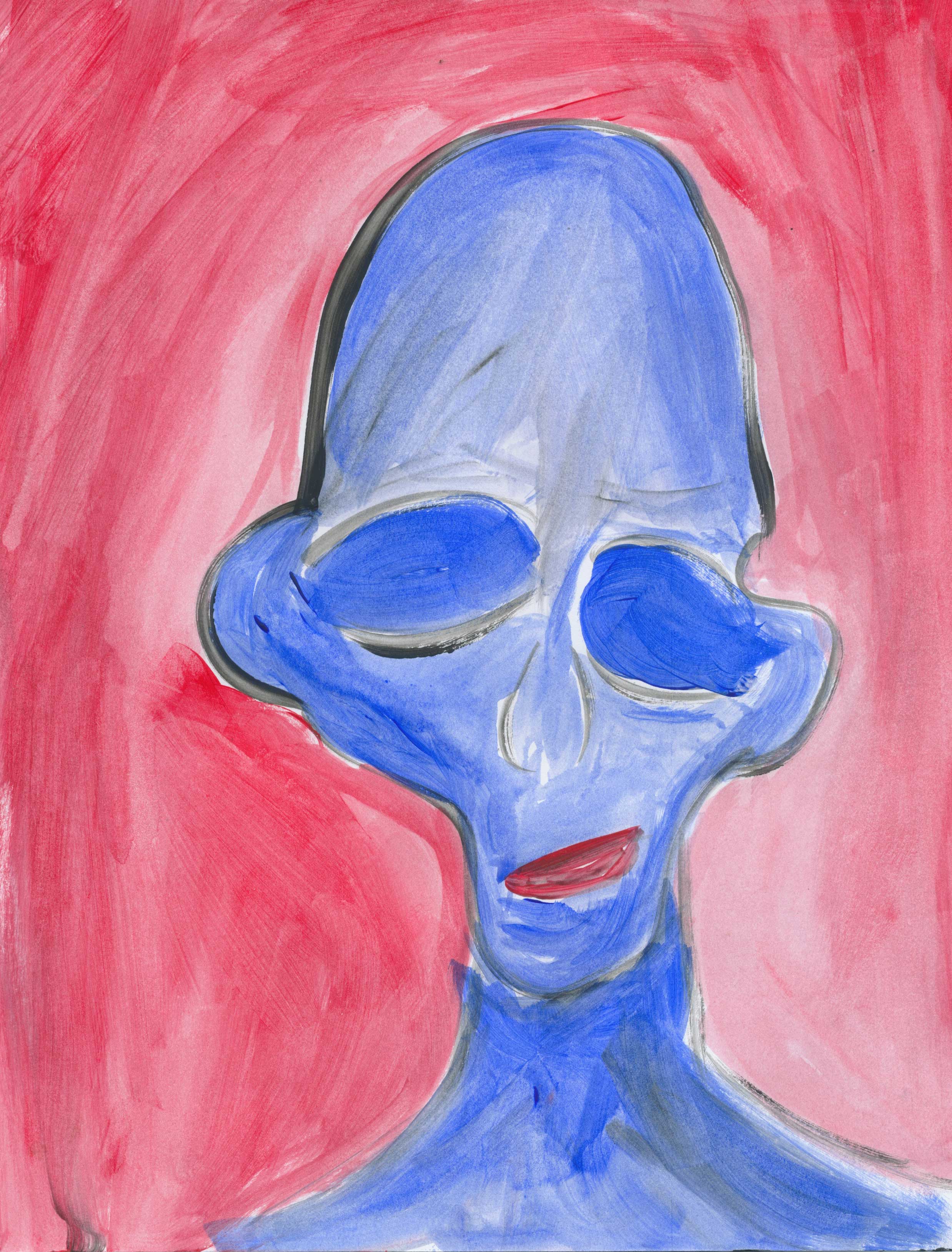
I’ve been studying one of my painting books and found something interesting, I wanted to share with everyone.   It has to do with a mathematician from the 13th Century named Fibonacci, he recognized a series in nature, where the third number is the sum of the two preceding numbers.


0, 1, 1, 2, 3, 5, 8, 13, 21 etc.


Otherwise known as the “Golden Ratio” or phi. The ratio of 1.618 and can be detected through out nature, discovered in plants, animals, DNA, crystals, everywhere in life. Basically divide your picture plane into thirds both horizontally and vertically and never have the focal point in the middle.


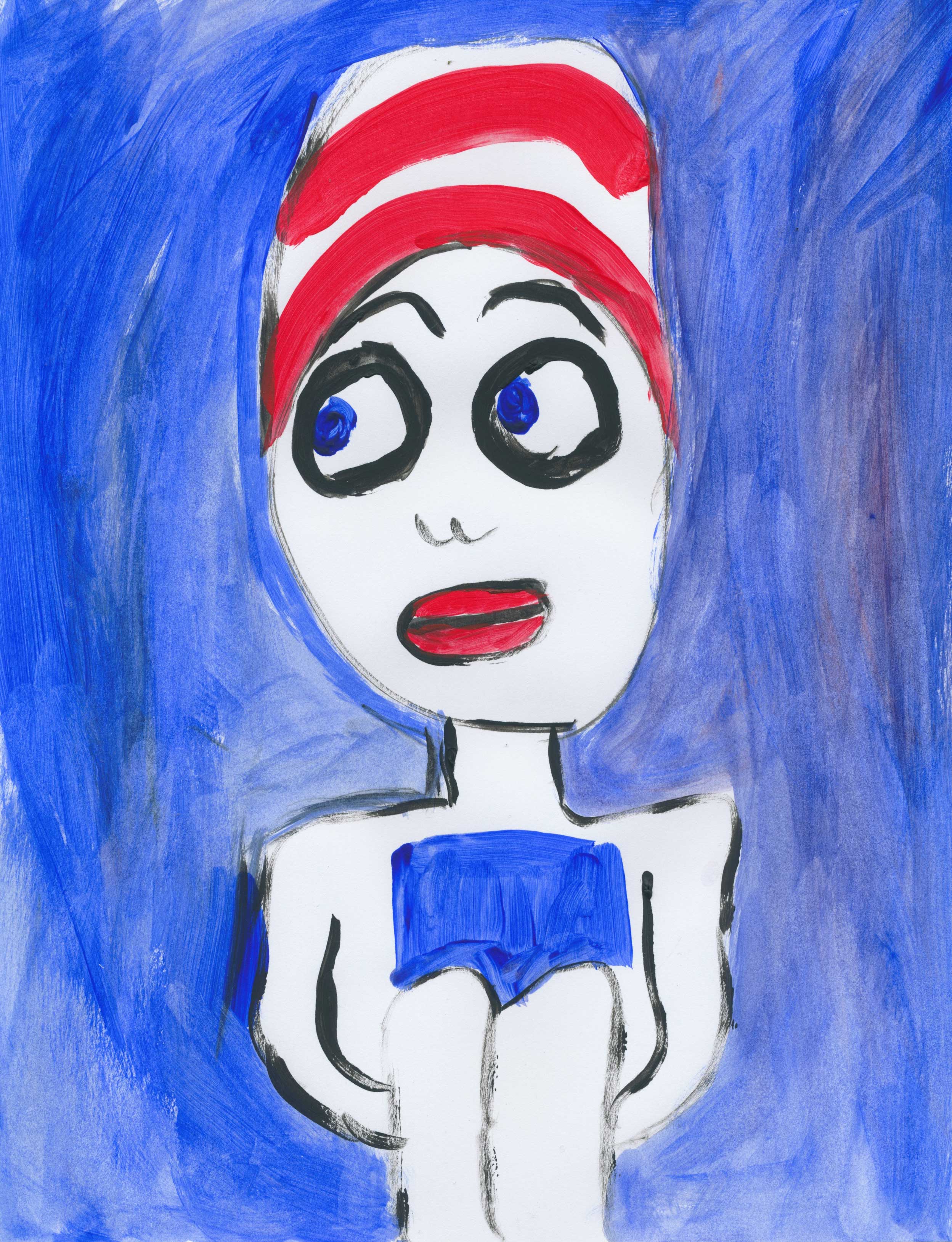
I created this painting; I’m calling it “Blue Alien”.   I used Acrylic paint on 8 ½ inches by 11 inches, 110 pound card stock.


Blue Alien


Lessons Learned:

  • Bones in our hands from the tips of the fingers to the base of the wrist increase by the proportion of 1.618
  • The length from the shoulder to the fingertips, divided by the length from the elbow to the fingertips is 1.618
  • Divide your page into thirds
  • Never place your subject in the direct center


My thoughts:

While I don’t divide my page in exact thirds, this theory is used in design of web sites, photography, painting, and drawing; I do keep it in mind. Because it is found in nature and is all around us, it only makes sense that people would find your painting more pleasing.

Beacon Tate


Blue Eyed Alien – Paint Daily

Canadian Blogger eh!

June 18 2015

I am thankful for dinners with family.

Category Painting

I paint everyday.   I usually get up at five and paint for one to two hours. I haven’t really put together a “painting” per say; but I do paint daily.

I paint with acrylic paint, watercolour paint, and or ink.   I use 8.5 by 11 inches, 110 pound card stock paper, or 100 pound Bristol / vellum Bristol in various sizes, or 140 pound watercolour paper in various sizes.

I research what to paint the day or night before.   This avoids looking at a blank page not knowing where to start. I do my research on the Internet, books, magazines, videos and other sources. I keep my eyes open as I go through my day on what I could paint.

When I first started painting, I started out using low-grade paint and brushes. This is a mistake and can be very disappointing.

Sometimes I start painting and whatever flows onto the paper is what I paint. Other times I find a picture or painting and use that as a reference point.   One of the hardest parts for me is how or what to paint in the background and still have the focus painting shine through. Sometimes I paint onto a blank page with nothing really in mind and use that painting as the starting point or background for a future session.

Really a good painting class would be beneficial. Sometimes I sketch out what I’m painting and sometimes I just paint or ink up the brush and get started.

Currently I paint faces.   I read a few books on anatomy and painting portraits and find the more I read, the more I need to read. I am constantly studying if you will on how to do things better.   All that needs to be taken into consideration, things I never thought about before. So many things to learn, so little time.


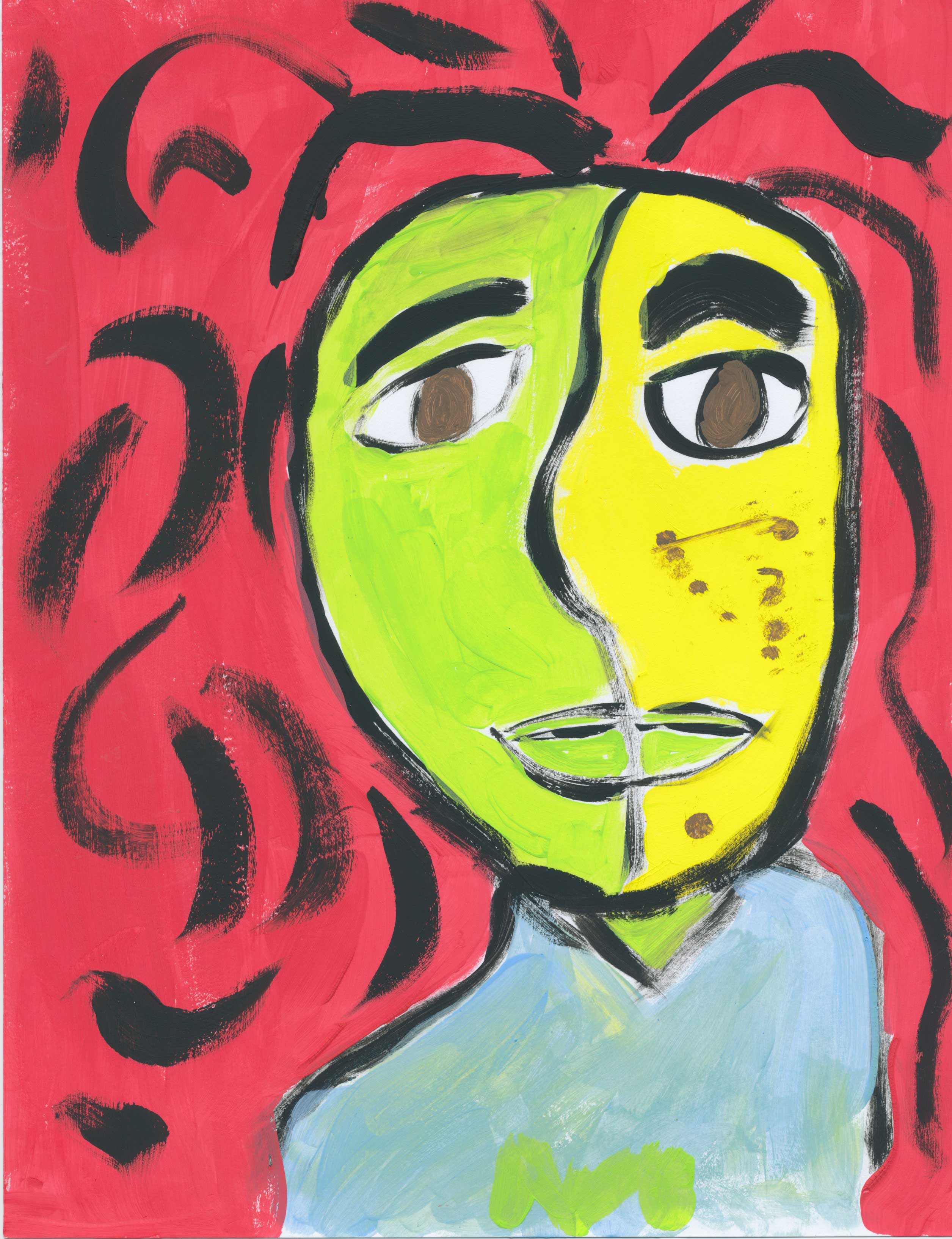
This is one of my first paintings.   Titled “Blue Eyed Alien” 2015

1502005


Watercolour paint on 140 lb  9in X 12in watercolour paper


Lesson Learned:

  • Never start with a blank paper – have something in mind
  • If you don’t have anything in mind, get paint on your brush and get started – don’t waste time looking at that blank page
  • Check the quality of the paints and brushes before purchasing a paint kit
  • Pay attention to details, try to paint what you see or feel – not what you think you see


Final thoughts:

Buy the best quality paint and brushes you can afford.  Do your research on the Internet and or in painting books and consult the individuals in the art stores on what quality of paint and brushes fit your needs.

Do some research on what to paint before you get your brushes out.

I never try to copy a painting, I just study it to come up with ideas and hopefully get some insight into creating.

Draw and or paint daily!

It’s great if others like your paintings, but for the most part paint for yourself. Paint because it’s one of your passions, hours roll by and you get totally absorbed in it.

Beacon Tate